



NTR1
Neurotensin receptor 1 (NTR1, also known as NTSR1) is a high-affinity G protein-coupled receptor that mediates the biological actions of the neuropeptide neurotensin in both the central nervous system and peripheral tissues[1][2]. Mechanistically, NTR1 activation induces receptor conformational changes that promote coupling to G proteins and β-arrestins, thereby regulating downstream signaling pathways involved in neuronal activity, cellular proliferation, and physiological homeostasis[2][3]. Through these signaling mechanisms, NTR1 contributes to the regulation of dopaminergic neurotransmission and has become an important experimental target in studies of neuropsychiatric disorders and addiction-related behaviors[4]. In disease-associated contexts, elevated NTR1 expression has been reported in several malignancies, and neurotensin-dependent signaling can engage oncogenic pathways including PKC/ERK and AKT, supporting investigation of NTR1 in cancer biology models[5]. Compared with related neurotensin receptor isoforms, NTR1 displays high affinity for neurotensin, whereas NTR2 exhibits lower affinity and distinct pharmacological recognition characteristics, indicating functional and pharmacological differentiation within the receptor family[6]. For experimental applications, diverse peptide and small-molecule modulators have been developed to interrogate NTR1 signaling, including agonists, antagonists, and biased ligands that selectively influence G-protein- or β-arrestin-associated responses[3][4]. These pharmacological tools facilitate mechanistic studies of receptor activation, signaling bias, and disease-relevant pathway regulation[3][4].
References:
- [1]. White JF, et al. Structure of the agonist-bound neurotensin receptor. Nature. 2012 Oct 25;490(7421):508-13. [Content Brief]
- [2]. Uniprotkb.
- [3]. Lu X, et al. Mechanistic Elucidation of Activation/Deactivation Signal Transduction within Neurotensin Receptor 1 Triggered by 'Driver Chemical Groups' of Modulators: A Comparative Molecular Dynamics Simulation. Pharmaceutics. 2023 Jul 21;15(7):2000. [Content Brief]
- [4]. Singhal SM, et al. Neurotensin receptor 1-biased ligand attenuates neurotensin-mediated excitation of ventral tegmental area dopamine neurons and dopamine release in the nucleus accumbens. Neuropharmacology. 2023 Aug 15;234:109544. [Content Brief]
- [5]. Wu Z, et al. Neurotensin and its high affinity receptor 1 as a potential pharmacological target in cancer therapy. Front Endocrinol (Lausanne). 2013 Jan 17;3:184. [Content Brief]
-
NTR1 Related Products (9)
Related Products (9)

-
ML314
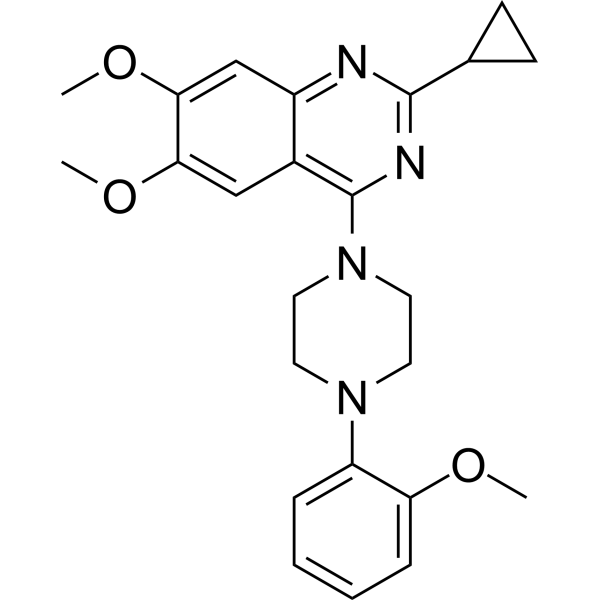 0 ImagesML314 is a potent, BBB-penetrant and β-arrestin biased molecule agonist of NTR1 (EC50 = 1.9 μM). ML314 shows good selectivity against NTR2 and GPR35, but does not stimulate Ca2+ mobilization. ML314 can attenuate amphetamine-like hyperlocomotion in dopamine transporter knockout mice. ML314 attenuates methamphetamine-associated hyperlocomotion and potentiates the psychostimulant inhibitory effects of a ghrelin antagonist in wild type mouse model. ML314 also acts as an allosteric enhancer of endogenous neurotensin. ML314 antagonizes G protein signaling. ML314 can be studied in research for methamphetamine abuse conditions.
-
DOTA-NT-20.3-IPBA
 0 ImagesCat. No.: HY-P11845DOTA-NT-20.3-IPBA is a Neurotensin receptor 1 (NTR1)-targeting albumin binder with specific high-affinity binding to NTR1. DOTA-NT-20.3-IPBA is formed by the conjugation of DOTA-NT-20.3 and IPBA. DOTA-NT-20.3-IPBA can be used for positron emission tomography (PET) imaging following labeling with [68Ga]Ga.
-
Fmoc-DL-Leu-OH
 0 ImagesFmoc-DL-Leu-OH acts as a partial agonist of the neurotensin NTS1 receptor (NTS1R) with an EC50 of 215.50 μM. Fmoc-DL-Leu-OH triggers intracellular calcium mobilization, and its activity is blocked by selective NTS1R antagonists. Fmoc-DL-Leu-OH can be used in the research of schizophrenia.
-
SR-12062
 0 ImagesCat. No.: HY-182551CAS No.: 1623019-77-1SR-12062 is a Neurotensin receptor 1 (NTSR1) full agonist that modulates NTSR1 to trigger intracellular Ca2+ mobilization. SR-12062 can be used for the research of schizophrenia, parkinson’s disease, drug addiction.
-
JMV 7490
 0 ImagesCat. No.: HY-P11594JMV 7490 is a highly potent and highly hydrophilic neurotensin receptor NTS1 probe that can be successfully labeled with 68Ga and 111In. JMV 7490 acts as an efflux inhibitor to reduce its efflux in NTS1-positive cancer cells; it also serves as an internalization inducer and is efficiently and continuously internalized by NTS1-positive cancer cells. 111In-radiolabeled JMV 7490 shows persistent uptake in NTS1-positive xenografts in nude mice, but no significant uptake in NTS1-negative xenografts. JMV 7490 can be used for in vivo tracer applications of NTS1-positive tumors and supports related research on colorectal cancer.
-
(D-Tyr11)-Neurotensin
 0 ImagesCat. No.: HY-P0234ACAS No.: 64088-62-6(D-Tyr11)-Neurotensin is an agonist of neurotensin receptor (Neurotensin Receptor) and an inhibitor of glutamatergic neurotransmission. Activation of NTR1 in the VTA by (D-Tyr11)-Neurotensin enhances glutamatergic inputs to non-dopaminergic neurons, mediating reward and dopamine efflux; meanwhile, activation of NTR2 reduces glutamatergic excitatory postsynaptic currents (EPSC) in dopaminergic neurons. (D-Tyr11)-Neurotensin can be used in studies related to schizophrenia.
-
BIM-46174
 0 ImagesCat. No.: HY-183400CAS No.: 195450-11-4BIM-46174 is a heterotrimeric G protein complex inhibitor. BIM-46174 blocks GPCR downstream signaling by trapping Gα proteins in a nucleotide-free pocket conformation, thereby inhibiting Gαq-mediated calcium release, Gαs-mediated cAMP production, and GPCR-regulated cancer cell invasion. In vitro, BIM-46174 effectively suppresses a variety of clinically multidrug-resistant cell lines and induces tumor cell apoptosis through activation of caspase-3 and PARP cleavage. BIM-46174 also inhibits activation of the Neu1-MMP-9-GPCR signaling platform and downstream NF-κB signaling, and is widely used in the study of cancer signaling pathways and inflammation-related research, including lung cancer, pancreatic cancer, breast cancer, melanoma, and leukemia.



